
How to Get Rid of Humidity in a Basement
Short answer
Buy a hygrometer and measure first: you want the basement below 60% humidity, and ideally between 30% and 50%. Stop water coming in from outside by fixing gutters, downspouts, and the slope of the ground. Then run a dehumidifier with a drain hose so it can work all the time. Keep basement windows closed on hot, humid days.
Quick steps
- Put a hygrometer in the basement and check it over a few days.
- Make sure gutters are clear and downspouts empty well away from the house.
- Close basement windows on hot, humid days.
- Run a dehumidifier set to about 50%, with a hose to a floor drain or sump.
- Insulate cold water pipes that drip with condensation.
Need supplies? Jump to what to buy
1. Measure it
Basements are naturally cool and damp, but you need a number to know if there’s a problem. Put a digital hygrometer in the middle of the basement and check it morning and evening for a few days.
The EPA recommends keeping indoor humidity below 60%, ideally 30% to 50%. Above 60% for long periods, mold and musty smells start.
2. Stop water getting in
A dehumidifier can’t keep up with water that keeps coming in. Walk around the outside of the house first:
- Gutters should be clear and not overflowing.
- Downspouts should empty well away from the walls. Add extensions if they dump water at the foundation.
- The ground should slope away from the house, so rain runs off rather than toward the basement.
Inside, look for wet patches on walls, white chalky deposits (a sign water has passed through the concrete), and puddles after rain.
3. Find moisture sources inside
- A clothes dryer must vent outside, not into the basement.
- Cold water pipes sweat in summer. Foam pipe insulation stops the drips.
- Drying laundry on a rack downstairs adds a lot of water to the air.
- Windows left open on hot, humid days let in moist air that condenses on cool basement walls.
4. Run a dehumidifier
For most basements, a dehumidifier is what finally brings the number down. Look for:
- Enough capacity for the size of the space and how damp it is. A bigger unit in a very damp basement runs less and lasts longer.
- A drain-hose outlet, so it can empty into a floor drain or sump pit instead of filling a bucket.
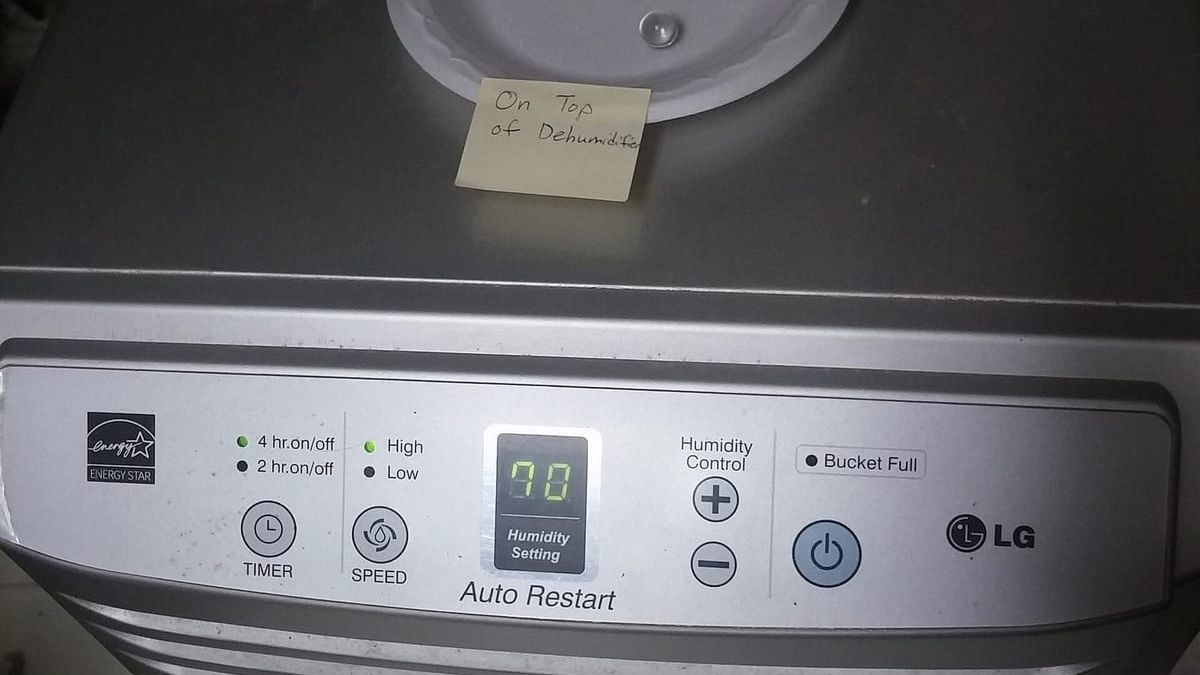
- ENERGY STAR certification, because it may run for months; certified models use less electricity.
- A built-in humidity setting. Set it to about 50% and let it switch itself on and off.
Keep doors and windows closed while it runs, and clean the filter as the manual says.
If the basement already smells, the damp has had time to grow mold. See how to get rid of a musty basement smell.
When to call a professional
Get help for standing water, cracks that leak, a sump pump that can’t keep up, or mold covering a large area. The EPA suggests that mold over about 10 square feet is a job for a professional.
What to buy
We may earn a commission if you buy through these links, at no extra cost to you. How this works
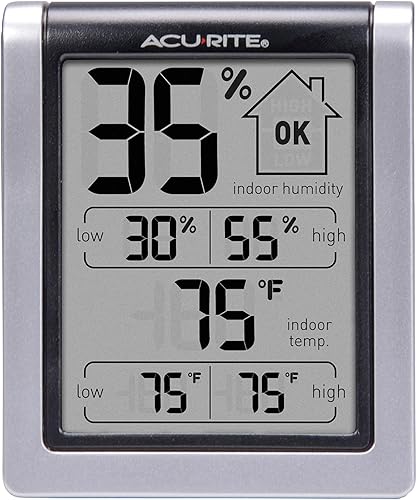
Digital hygrometer
AcuRite Digital Indoor Thermometer and Hygrometer
Measuring indoor humidity so you know whether you have a problem and whether your fix is working. Cheap, and the first thing to buy.
Good to know: Give it 30 minutes to settle after you move it. Readings of a few percent apart between units are normal.
Check price on Amazon
ENERGY STAR dehumidifier
hOmeLabs ENERGY STAR Dehumidifier, 4,500 sq ft
Basements, laundry rooms, and any space that stays above 60% humidity. Pulls water out of the air and collects it in a bucket or drain hose.
Good to know: Pick a capacity that matches the room size and how damp it is. A model with a drain-hose outlet saves you from emptying the bucket. ENERGY STAR models use less electricity.
Check price on AmazonCommon questions
What humidity should a basement be?
The EPA recommends keeping indoor humidity below 60%, ideally between 30% and 50%. Setting a dehumidifier to around 50% is a sensible target for a basement.
Should I open basement windows to dry it out?
Not in warm, humid weather. Warm outside air cools down in the basement and its moisture condenses on walls and floors, so opening windows can make it damper. Opening them can help on cool, dry days.
Can a dehumidifier fix a wet basement?
It can dry damp air, but it can't keep up with water coming through walls or the floor. Fix leaks and drainage first. Standing water, cracks that leak, or a failing sump pump need a professional.
Is 70% humidity in a basement bad?
Yes. The EPA recommends keeping indoor humidity below 60%. At 70%, mold and mildew can grow on boxes, carpet, and drywall, and the basement will start to smell musty.
Can I keep a basement dry without a dehumidifier?
Sometimes, if the moisture comes from outside water you can fix: clogged gutters, short downspouts, or ground that slopes toward the house. In humid climates, most below-ground basements still need a dehumidifier in summer. Moisture absorber tubs are too small for a whole basement.