
How to Get Rid of Dead Animal Smell in Your House
Short answer
The smell is almost always a mouse or rat that died in a wall, attic, crawl space, or under an appliance. Follow the smell and look for flies and stains. If you can reach the animal, wear gloves, spray it with disinfectant, bag it, and clean the spot. If you can't reach it, the smell fades as the animal dries out, usually within a few weeks for a mouse. Air the room, absorb the odor, and seal the gaps animals use to get in.
Quick steps
- Find the spot where the smell is strongest, and look for flies, stains, or droppings.
- Check under and behind appliances, in the attic, crawl space, basement, and vents.
- Wear gloves. Spray the animal with disinfectant, wait 5 minutes, then bag it twice.
- Clean the spot and throw out soiled insulation or fabric.
- If you can't reach it, ventilate, use charcoal bags, and wait for it to dry out.
Need supplies? Jump to what to buy
1. Find where it’s coming from
A dead animal smell is sweet, rotten, and gets stronger over a few days. Walk through the house and find where it’s strongest. Then look for clues:
- Flies gathering at one spot on a wall, ceiling, or window
- A stain spreading on a ceiling or wall
- Droppings or chewed insulation nearby
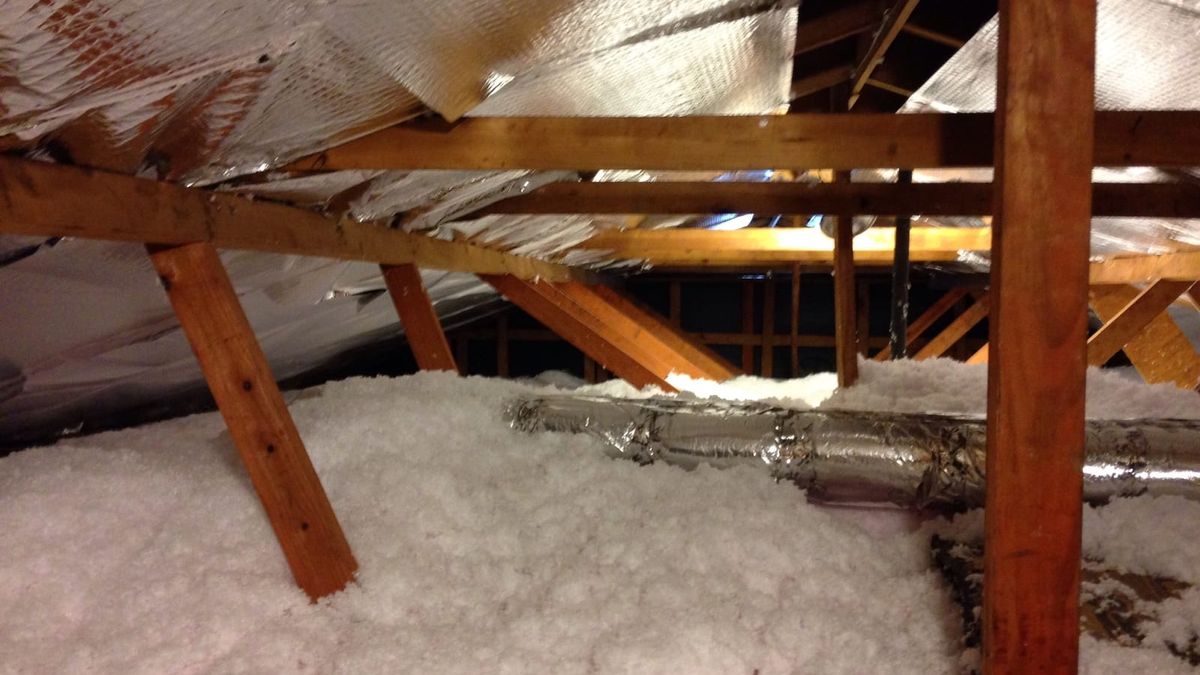
The usual places are under and behind the fridge, stove, and dishwasher (pull off the kick plate at the bottom), inside walls and ceilings, the attic, the crawl space, the basement, and inside air vents and chimneys. Check any traps you’ve set.
If the smell is more like sewage or rotten eggs, it may not be an animal. See our sewer smell guide.
2. Remove it safely
Dead rodents can carry disease. The CDC’s cleanup advice:
- Wear rubber, latex, or vinyl gloves.
- Spray the animal and the area around it with a household disinfectant or a bleach solution of 1 part bleach to 10 parts water. Let it soak for 5 minutes.
- Pick it up with a paper towel or by turning a plastic bag inside out over your hand.
- Seal it in a plastic bag, then put that in a second bag. Put it in a covered outdoor trash can.
- Clean the spot with disinfectant. Wash your gloved hands, take the gloves off, and wash your hands with soap and water.
The CDC also says not to sweep or vacuum droppings or nesting material, because that puts dust into the air. Spray them and wipe them up instead.
3. Clean what it touched
Fluids soak into whatever is under the animal. Throw out stained insulation, cardboard, and fabric. On floors and hard surfaces, after disinfecting, use an enzyme cleaner on any stain that still smells.
4. If you can’t reach it
A mouse inside a wall usually dries out and stops smelling within one to three weeks. Larger animals take longer. While you wait:
- Ventilate. Open windows and run a fan blowing out of the room.
- Absorb. Put several activated charcoal bags near the strongest spot, and run an air purifier with a carbon filter in the room.
- Close the door to that room if you can.
Don’t use an ozone generator in a room people or pets are using. The EPA says ozone can harm the lungs and does little to remove odors at safe levels.
If the smell is very strong from one spot on a wall, a pest control or wildlife service can find and remove the animal. A small hole cut in drywall can be patched afterward.
5. Stop it happening again
Rodents that eat poison bait often die inside walls where you can’t reach them. Snap traps placed along walls let you remove them. Seal gaps around pipes, vents, and the foundation with steel wool and caulk, and keep food in sealed containers. A damp crawl space or cluttered attic also attracts them.
What to buy
We may earn a commission if you buy through these links, at no extra cost to you. How this works

Activated charcoal odor bags
Moso Natural Air Purifying Bag, 200 g (4 pack)
Soaking up leftover smell in cars, closets, shoes, and small rooms once the source is gone. Unscented, so they don't mask one smell with another.
Good to know: Charcoal absorbs smell; it won't fix an ongoing source like a damp carpet or a spill under a seat.
Check price on Amazon
Enzyme pet odor cleaner
Rocco & Roxie Enzyme Stain & Odor Eliminator, 32 oz
Urine, vomit, and other organic stains in carpet, upholstery, and car seats. The enzymes break down what causes the smell instead of covering it.
Good to know: Test on a hidden spot first and keep pets away until it has dried. It needs time to work, so don't rinse it off early.
Check price on Amazon
HEPA air purifier with carbon filter
Levoit Core 300 True HEPA Air Purifier
Smoke, pet, and cooking smells that hang in the air of one room, plus the dander and fine particles that come with them. The carbon layer handles odor; the HEPA layer handles particles.
Good to know: It cleans the air, not the walls, carpet, or furniture where smell is stored, so clean those first. Size it to the room and replace the filter on schedule. Avoid models that make ozone.
Check price on AmazonCommon questions
How long does dead animal smell last?
For a mouse inside a wall, usually one to three weeks while it dries out. A rat, squirrel, or bird can take longer, especially in warm weather. Removing the animal ends it much faster.
How do I get rid of the smell when I can't find the animal?
Ventilate the room, put activated charcoal bags and a carbon air purifier near the strongest spot, and wait. If the smell is coming from one spot in a wall and is unbearable, a small hole in the drywall there can be patched later, or a pest control or wildlife service can find and remove it.
Does vinegar get rid of dead animal smell?
Not while the animal is still there. Vinegar or sprays only cover the smell for a short time. Remove the animal if you can, clean the spot with disinfectant, and absorb what's left.
Is a dead animal smell dangerous?
The smell itself is unpleasant rather than harmful, but dead rodents, their droppings, and urine can carry diseases like hantavirus. The CDC says to wear gloves, not to sweep or vacuum droppings, and to wet everything with disinfectant before you clean it up.